Tashkent districts: where to buy an apartment to live in or to rent out

“Which district of Tashkent is best for buying an apartment?” is a question with no single answer. The best district for a family with two schoolchildren and the best district for a rental apartment almost never coincide, and the “average price across the city” suits neither. Let’s look at the criteria for choosing a district to live in and to rent out, how the types of housing differ, and how to check a district yourself in one day without relying on advertising.
Why the “average price in Tashkent” tells you little
The city’s median price per square metre is a useful reference point, but not the price of an apartment in a specific district. The city is large, and the gap between the centre and the outskirts, between a new complex and a last-century panel block, is huge. A buyer who compares a listing with the city-wide figure may decide an apartment is “expensive” when it’s in line with its district, or the other way round.
So compare within the district - better still, within the segment: the same type of building, a similar area and condition. We showed how much districts differ in price per metre with live numbers in the piece on apartment prices in Tashkent. Here we’ll cover what the numbers don’t show: how a district feels to live in and how it works for renting out.
Types of districts: the centre, estates, new complexes
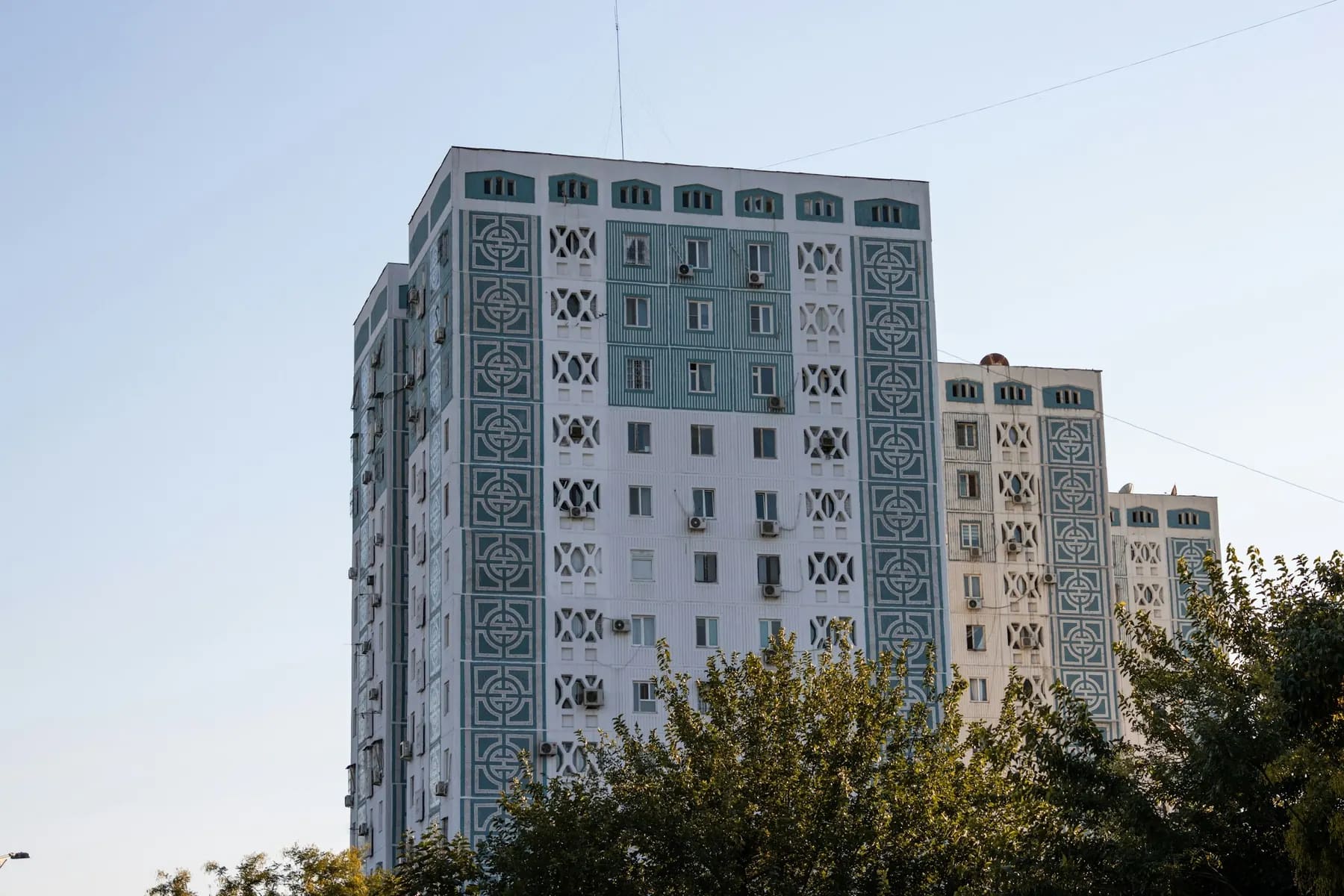
It’s easier to think not in terms of district names but types of housing. Within one administrative district, old mahallas, Soviet-era high-rises and new residential complexes can sit side by side, and for a buyer these are different markets.
Scroll the table sideways
| Type | For living | For renting out | What to look at |
|---|---|---|---|
| The centre and business quarters | For livingEverything is close, but noisy, expensive and short on parking | For renting outDemand from people working nearby and newcomers to the city | What to look atThe building’s age, parking, street noise, the state of the entrance |
| Established estates | For livingSchools, kindergartens, markets and transport have long been in place | For renting outSteady demand, especially near the metro | What to look atThe condition of the building and utilities, floor, lift |
| New residential complexes | For livingA new building, courtyard and parking, but infrastructure may lag behind | For renting outDemand depends on transport and how finished the area is | What to look atWhether the building is completed, ownership registered, what’s being built nearby |
| The outskirts and nearby private housing | For livingQuieter and cheaper, but further from work and schools | For renting outA narrow pool of tenants, a longer search for one | What to look atThe rush-hour commute, water and gas, street lighting |
The table describes types of housing, not a ranking of districts. A particular building can stand out from its type in either direction.
Criteria for living
An apartment for yourself is chosen for years, and what decides it isn’t square metres but what an ordinary weekday looks like. A good method is to describe your week honestly and check how the district fits into it.
The commute to work and school
The main criterion for most families. Count time at rush hour, not distance on a map: jams at the approaches to the centre and at big junctions change the picture more than kilometres do. A metro station nearby solves part of the problem - for someone commuting to the centre it often matters more than an extra room.
School, kindergarten, doctor, shops
In established districts all everyday infrastructure has long been in place; in new estates it’s sometimes only promised. If you’re buying in a new complex, check what of the promises already works and what exists only on the developer’s advertising plan.
Noise, courtyard and parking
- Windows facing a big road mean noise all year, especially in summer with the windows open.
- The courtyard: is there somewhere to walk with children, or has it turned into a car park.
- Evening parking: in older districts there’s often nowhere to leave the car.
- Construction nearby: today’s vacant lot under the windows is a high-rise and noise a year later.
Criteria for renting out
A rental apartment is chosen through the tenant’s eyes, not your own. A quiet courtyard and a good school five years from now don’t matter to them - what matters is how long it takes to get to work or study and how much the rent costs per month. That leads to different criteria.
- Proximity to universities, business centres, big markets and hospitals - there’s a constant flow of tenants there.
- A metro station within walking distance: for a tenant without a car it’s the main filter.
- A small area: one- and two-room apartments rent faster and find tenants more easily.
- Ready to move into: furniture, appliances, air conditioning - an empty apartment is harder to rent.
For yourself
An apartment to live in
- Your family’s commute to work and school
- A quiet courtyard, parking, neighbours
- Space for the family for years ahead
- A district that’s comfortable to live in, even if not the most liquid
For a tenant
An apartment to rent out
- The tenant’s commute to work or study
- The metro and transport matter more than the courtyard
- A small area that finds a tenant quickly
- Rental demand nearby, not the district’s looks
Remember liquidity too: one day you’ll want to sell a rental apartment. An apartment in an established district near the metro usually finds both a tenant and a buyer faster than an unusual layout in a building with nothing around it yet.
How to check a district in one day
District advertising is written by sellers. You can check a district yourself, and one weekday plus an evening is enough. Here’s the order.
Checking a district before buying
Six steps in one weekday
Map your own routesAt home, 20 minutes
Work, school or kindergarten, parents, the metro - how long it takes on weekdays, not on Sunday.
Walk the district in the morningA weekday
How people leave for work, where the traffic jams are, how many cars are in the courtyards, whether transport runs.
Come back in the eveningAfter 19:00
Noise from the road and cafés, lighting, where people park, what the courtyard looks like after work.
Drive the route at rush hourOnce - without fail
Twenty minutes by navigator at night and fifty in the morning are two different districts to live in.
Talk to people who live there10 minutes
Neighbours, the concierge, the nearest shopkeeper: water, power, construction nearby, who lives in the building.
Look at the district’s numbersBefore deciding
The median price per m², how many apartments are for sale and how long they stay up before removal.
The last step - the district’s numbers - is easiest to see with a realtor who works with the market mirror: it shows the median price per metre for the district, how many apartments are for sale right now and how long they stay up before removal. If apartments in a district sell slowly, that isn’t necessarily bad for a buyer - it’s more of a bargaining argument. If they sell quickly, you’ll have less time to think.
For realtors: how to help a client choose a district
A client who comes in saying “I want a good district” usually doesn’t yet know what they want. The realtor’s task is to turn that wish into two or three specific districts before the first viewing. A short conversation about the client’s week helps: where the adults work, where the children study, whether they have a car, how often they visit their parents, what annoys them about their current home.
- Suggest two or three districts based on the client’s answers and explain why those.
- Show the numbers for each: the median price per metre and how many apartments are on sale now.
- Name the trade-offs honestly: cheaper but further, closer but noisier.
- Suggest the client drives the rush-hour route themselves before the first viewing.
Record the chosen districts in the client’s request rather than keeping them in your head. Then it’s easy to find options on the market for the request and save the search: new listings in the right district arrive in Telegram the day they appear, not a week later when others have already viewed them.
Mistakes when choosing a district
- Choosing by a district’s “prestige” rather than by your own commute.
- Seeing a district only at the weekend during the day, when there’s no traffic or noise.
- Buying to rent out where you’d like to live yourself, rather than where people rent.
- Treating promises of future infrastructure as if it were already built.
- Comparing an apartment’s price with the city median instead of the district median.
The live figures are aggregates from the Titul mirror for apartment sale listings in Tashkent: asking prices, not transaction prices; medians, not averages. The table of housing types is a qualitative description, not a ranking of districts.