Developer installment plans in Tashkent: what to check in the contract

A developer’s instalment plan looks like a mortgage without a bank: a small first payment, a clear schedule, no income certificates. That is why people often choose it without reading the contract to the end. But an instalment plan isn’t a single product with uniform rules - it is a contract with a specific developer, and each one has its own terms. Let’s look at which clauses to check before signing and where buyers usually take on more risk than they think.
What a developer instalment plan really is
An instalment plan is a contractual arrangement: the developer sells the apartment and agrees to receive the money in parts. How exactly is up to them. One charges more for instalments than for paying in full, another has a shorter schedule, a third ties payments to an exchange rate, a fourth may revise the price as construction goes on. Advertising usually talks about the first payment and the term, and everything else lives in the contract.
Hence the main rule: compare contracts, not advertised offers. Two apartments with the same “first payment” can cost a buyer very different amounts once you add up all the payments and consider what happens if a payment is late.
How to work out the full cost
Add up every payment on the schedule: the first payment, monthly or quarterly payments, and the final payment if there is one. Next to it, put the price of the same apartment paid in full upfront - ask the developer for it directly. The difference between the two sums is the price of the instalment plan, even if the advert says “interest-free”. If payments are tied to an exchange rate, calculate the schedule not only at today’s rate but at one less favourable to you: over a plan lasting several years the rate will almost certainly change. And compare options in one currency only, or one apartment will look cheaper than another because of arithmetic rather than terms.
What the advert shows
The promise
- The size of the first payment
- The instalment term
- An attractive monthly payment
- The completion date
What to check in the contract
The terms
- The full sum of all payments and the currency
- Penalties for late payment and the developer’s right to terminate
- Whether the price and area can change
- The developer’s liability for a delayed completion
Contract clauses you need to read
The table below is a list of questions for the contract. It doesn’t replace a lawyer, but it helps you arrive prepared and not miss what the sales manager won’t mention on their own.
Scroll the table sideways
| Clause | What should be clear | Red flag |
|---|---|---|
| Subject of the contract | What should be clearExactly which apartment: building, floor, number, area, layout | Red flag“An apartment of approximately…” with no number or layout |
| Price | What should be clearWhether the price is final and what happens if the actual area differs from the design | Red flagThe developer may change the price unilaterally |
| Payment schedule and currency | What should be clearDates, amounts, currency, how a payment is recalculated if tied to an exchange rate | Red flagThe schedule is “to be agreed separately” or not attached to the contract |
| Late payment | What should be clearThe size of penalties, whether there is a grace period, after how many late payments the developer can terminate | Red flagTermination for a single late payment, keeping most of what was paid |
| Completion date | What should be clearA specific date and what the buyer gets if it is moved | Red flagA date “approximately” with no liability for delays |
| Termination and refunds | What should be clearWithin what period and what amount is refunded if either party terminates | Red flagRefund “after the apartment is sold to another buyer” |
| Assignment | What should be clearWhether the rights under the contract can be sold before completion and on what terms | Red flagA ban on assignment, or developer consent “at its discretion” |
| Registering ownership | What should be clearWhen and how the apartment is registered to the buyer, and what happens before full payment | Red flagNo registration procedure in the contract at all |
The table is a list of questions for the contract, not a legal opinion. Have a lawyer assess the wording of the specific contract.
Finishing and fittings
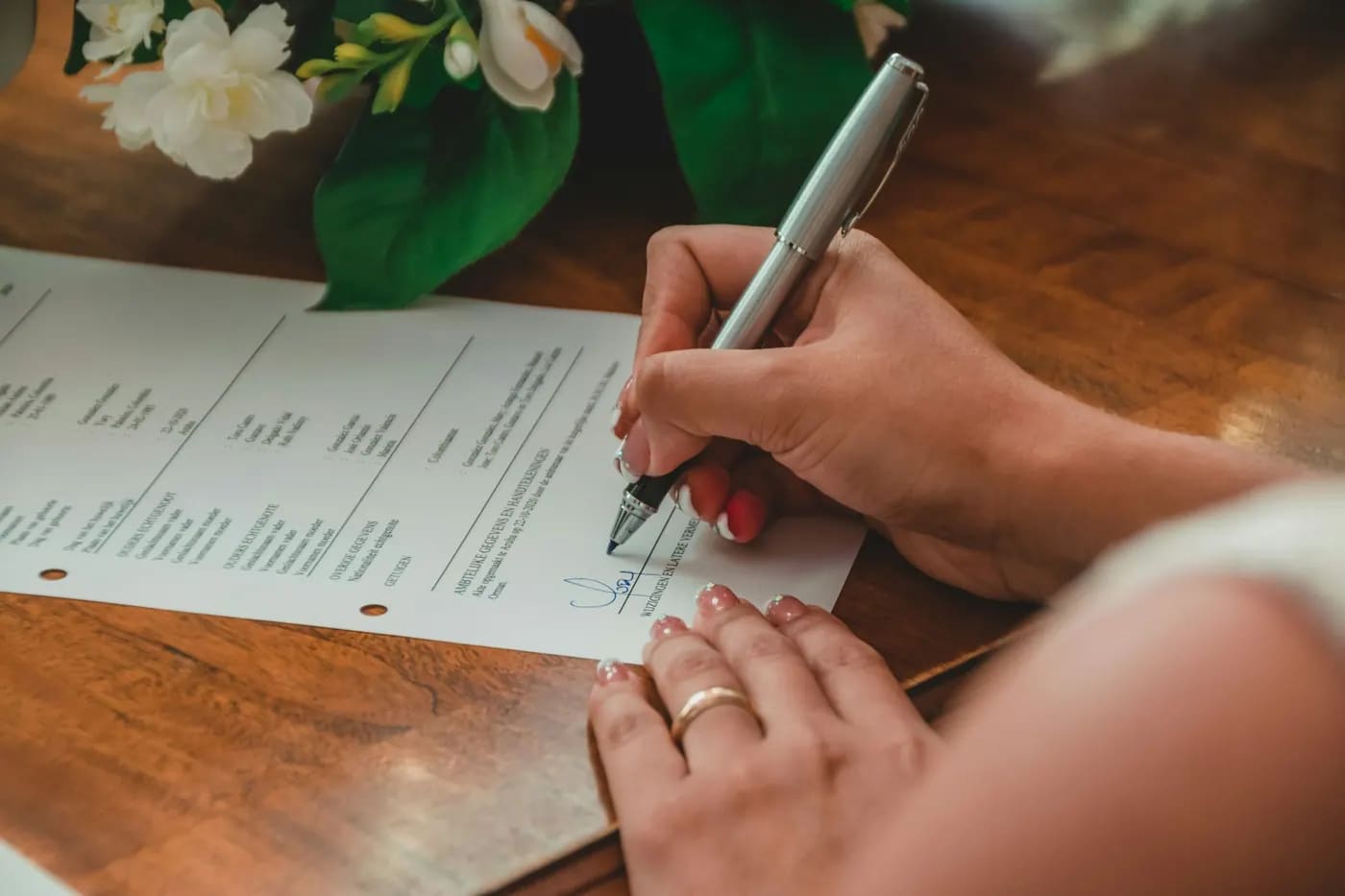
Check separately what condition the apartment is handed over in: shell, rough finish or full finish. If the advert said “apartment with renovation”, the contract should spell out what exactly the renovation includes. Anything not written down becomes a matter of the developer’s goodwill when the keys are handed over.
How to check the developer
With an instalment plan on a new build, the buyer carries the main risk - the construction risk. The apartment doesn’t exist yet, the money is already flowing, and everything depends on whether the developer finishes the building on time. That is why checking the company matters more than checking the specific apartment.
- Construction documents: whether the developer has permits for this building and rights to the land. A lawyer will tell you which papers to request and how to read them.
- Completed projects: visit buildings the company has already finished and talk to residents about completion dates, quality and registration.
- Construction progress: whether what you see on site matches the schedule in the advert. A site that has stood still for months is a reason for caution whatever the promises.
- Who is selling: the developer directly or an intermediary. The contract should name the company you are paying.
If construction is delayed
A delayed completion is the most common scenario, and it’s worth being ready for it in advance. Keep your correspondence with the developer in writing and save it: a verbal “just another couple of months” is worth nothing later. Reread the contract clause on liability for delays - it is what defines what you can demand. But don’t stop paying unilaterally without consulting a lawyer: a late payment on your side may give the developer the right to terminate on its terms.
Instalment plan or mortgage
Choosing between an instalment plan and a mortgage is choosing between two different risks. With instalments the buyer depends on the developer and its construction; with a mortgage, on the bank and on their own debt load for years ahead. Mortgage programme terms and bank requirements change, so check them with the bank on the date of your decision; we wrote in detail about how mortgages work in the article on mortgages in Uzbekistan.
A contract with the developer
Instalment plan
- The developer sets the terms, each its own
- Usually no bank check of income
- The main risk - construction timing and fate
- Ownership is registered under the contract’s rules
Key question Will the building be finished on time
A bank loan
Mortgage
- The bank sets the terms under its programme
- The bank checks income and the property itself
- The main risk - a debt load for years
- The apartment is usually pledged to the bank until repaid
Key question Can the budget carry the payment
If you are choosing between a new build and a resale apartment in general, start with that decision and only then compare payment methods. We covered that choice in the article “New build or resale”.
Before signing: seven steps
Checking an instalment plan before signing
The buyer’s sequence of actions
Compare the full costBuyer
The price for paying in full and the sum of all payments on the schedule - side by side, in one currency.
Get the draft contract in advanceDeveloper
Not on signing day but a few days before, so you can read it calmly and show it to a lawyer.
Check the developerBuyer, lawyer
Construction documents, completed buildings, construction progress compared with the promised schedule.
Go through the contract clauses with the tableBuyer, realtor
Price, schedule, late payment, completion date, termination, assignment, registering ownership.
Show the contract to a lawyerLawyer
A lawyer assesses the wording and risks of the specific contract, not the advertising.
Test the schedule against your budgetBuyer
The payment must survive a month with no income and rising costs, not just an ordinary month.
Sign and keep every payment recordBoth parties
Payment documents for every instalment, the schedule as an annex to the contract.
How a realtor helps here
A realtor doesn’t replace a lawyer but takes on what a buyer usually doesn’t have time for: gathering several offers, working out the full cost of each rather than just the first payment, comparing completion dates and termination terms. The buyer sees the options in one table and chooses between contracts rather than brochures.
The work doesn’t end after signing: the payment schedule, the completion date, accepting the apartment and registering ownership stretch over months. When a deal is run through a pipeline with stages, each step has a date and an owner, and a reminder about a payment or the handover doesn’t depend on the realtor’s memory.
This is a set of general rules for reading a contract, not legal advice: every developer’s instalment terms are their own, and a lawyer assesses the specific contract. We don’t quote rates, mark-ups or “typical” instalment terms.